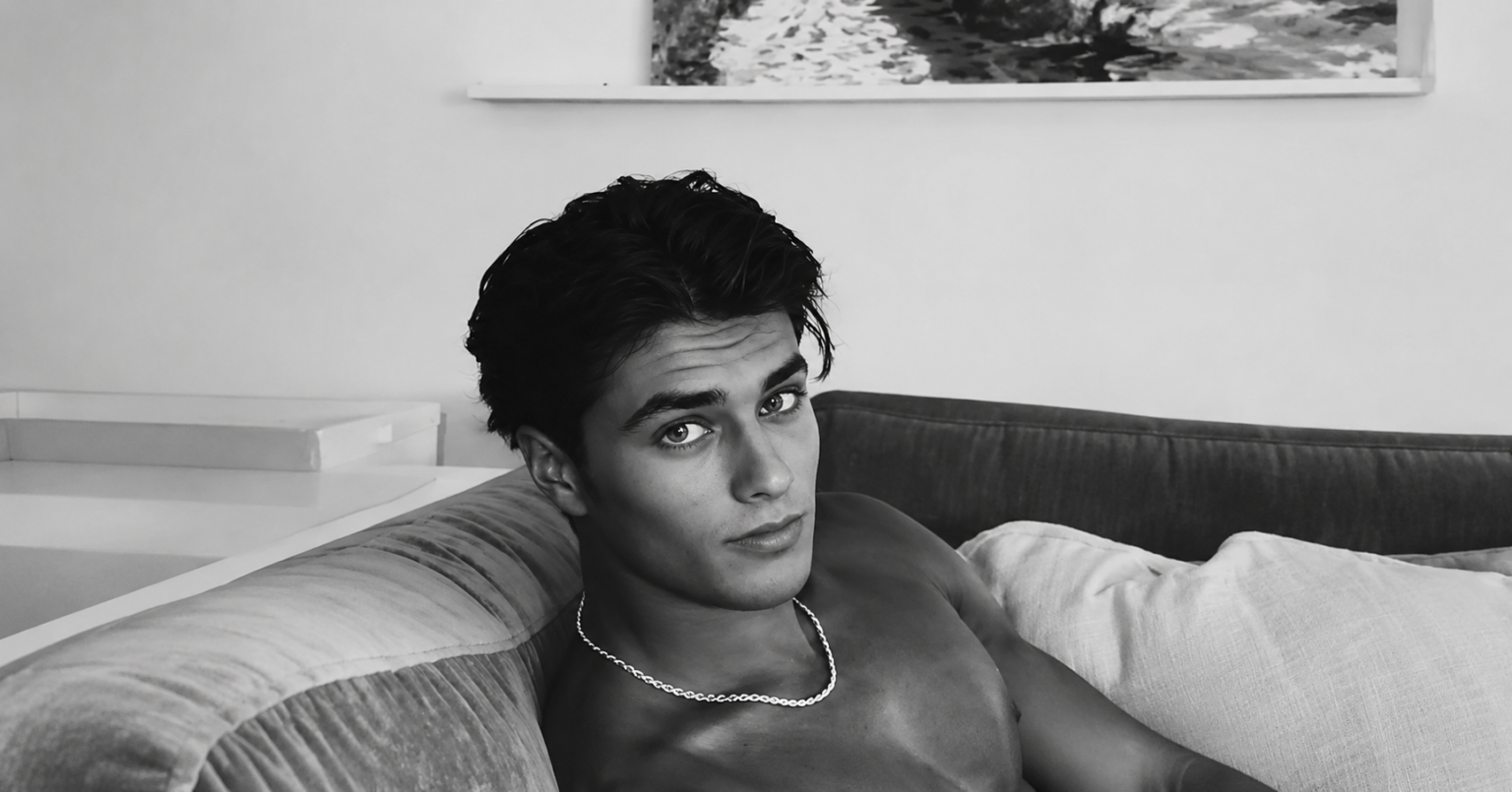
Was young Alain Delon the most handsome man ever?
Cinema has introduced the world to countless beautiful faces. From the golden age of Hollywood to modern international stardom, audiences have admired actors whose looks seemed almost unreal. Yet every generation eventually returns to one name when the conversation turns to male beauty at its absolute peak: Alain Delon.
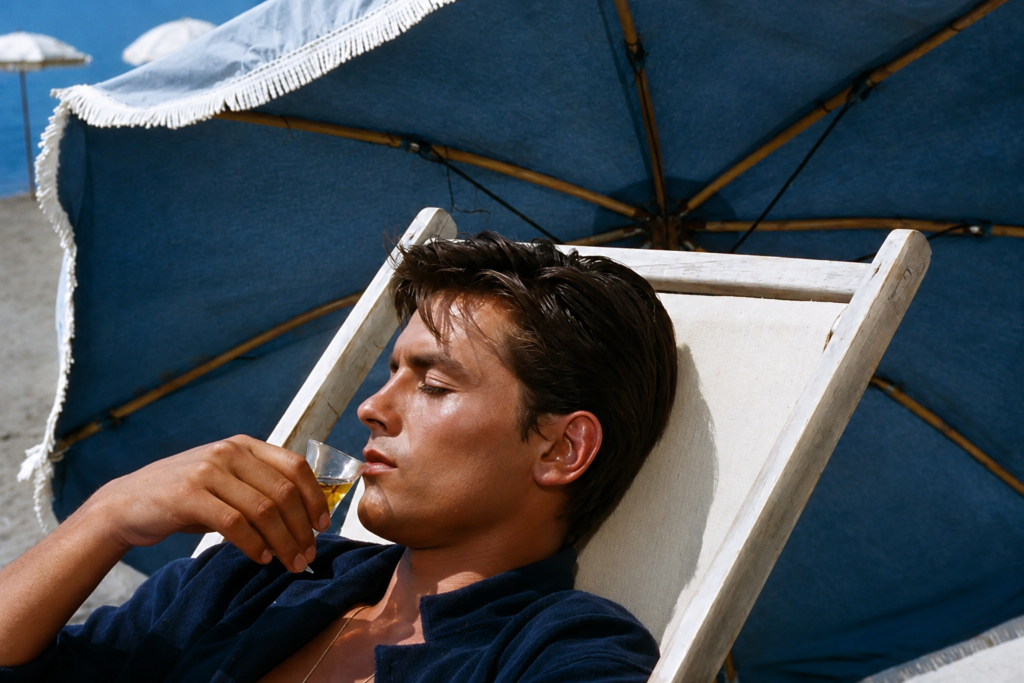
To call Delon simply “handsome” almost feels insufficient. Handsome is common. Alain Delon, especially during the 1960s, appeared untouchable — the kind of face that looked designed for the cinema screen itself. His piercing blue eyes, impossibly sharp cheekbones, effortless style, and calm, mysterious expression created an image so striking that decades later, social media still treats him as the ultimate standard of masculine beauty.
But what truly separated Delon from other attractive actors was not just his appearance. Many men have had strong jawlines or perfect symmetry. Delon possessed something rarer: aura. He carried himself with a cold elegance that made him impossible to ignore. He looked like a prince, but moved like a street fighter. He was refined and dangerous at the same time. That contradiction became his magic.
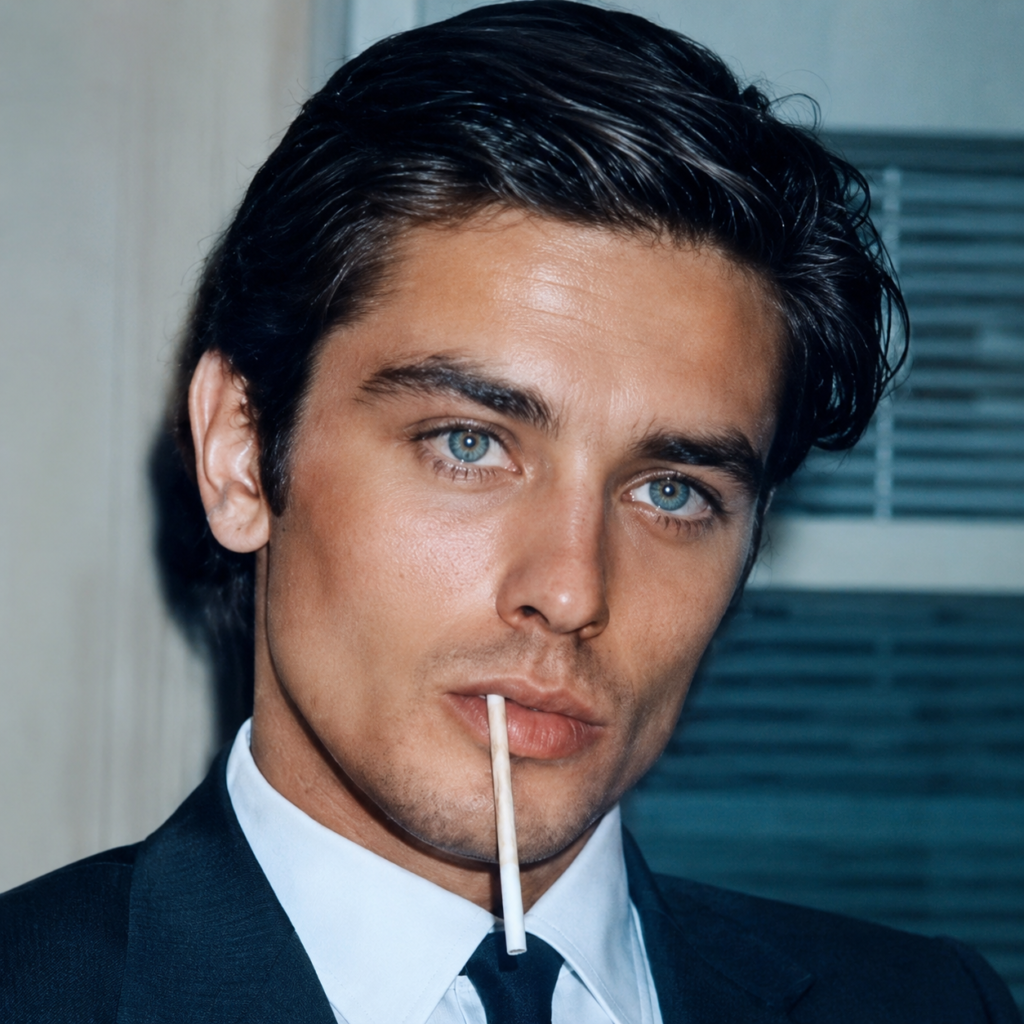
Unlike many stars manufactured by Hollywood studios, Delon’s rise felt accidental. Born into a working-class environment in France, he did not begin life as a polished aristocrat. He had a rebellious youth, served in the military, and carried a toughness that stayed visible even after fame transformed him into an international icon. That background mattered because beneath the beauty there was always tension. Audiences sensed that Delon was not merely posing for the camera — there was unpredictability in him.
When he appeared in films like “Purple Noon” (“Plein Soleil”), viewers saw something cinema had rarely produced before: a man so beautiful he almost looked fictional, yet emotionally unreadable. In that film, Delon adapted Patricia Highsmith’s Tom Ripley character into a seductive predator. He smiled less than other actors, spoke with restraint, and let his face do the work. The camera adored him. Every frame felt sculpted around his features.
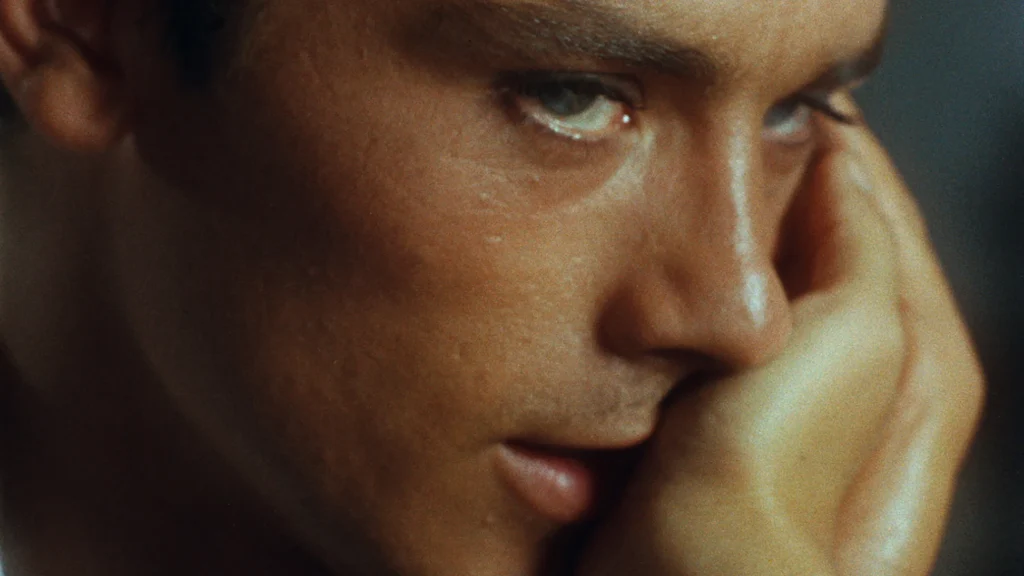
Soon after, directors such as Luchino Visconti recognized that Delon’s beauty alone was not the point. Visconti understood that Delon could embody both innocence and corruption simultaneously. In “Rocco and His Brothers,” Delon appeared youthful and vulnerable, while still carrying the energy of someone capable of violence. In “The Leopard,” standing beside legends like Burt Lancaster, Delon represented the arrival of a younger generation — beautiful, modern, seductive, and impossible to resist.
Then came the film that would define his mythology forever: Le Samouraï.
In that masterpiece by Jean-Pierre Melville, Delon transformed from merely beautiful into eternally cool. Wearing a gray trench coat and fedora, speaking very little, he played a hitman who moved through Paris like a ghost. His face became almost expressionless, but somehow even more magnetic. Delon proved something extraordinary in that performance: true charisma does not always come from trying to impress people. Sometimes the strongest presence belongs to the person who seems emotionally unreachable.
That became the essence of Alain Delon’s appeal. He did not beg for attention. He did not perform masculinity loudly. He simply existed on screen with absolute confidence. Modern celebrities often appear carefully managed, eager to maintain likability. Delon felt different. There was distance in him. Mystery. Audiences could admire him, desire him, even envy him, but they never fully understood him.
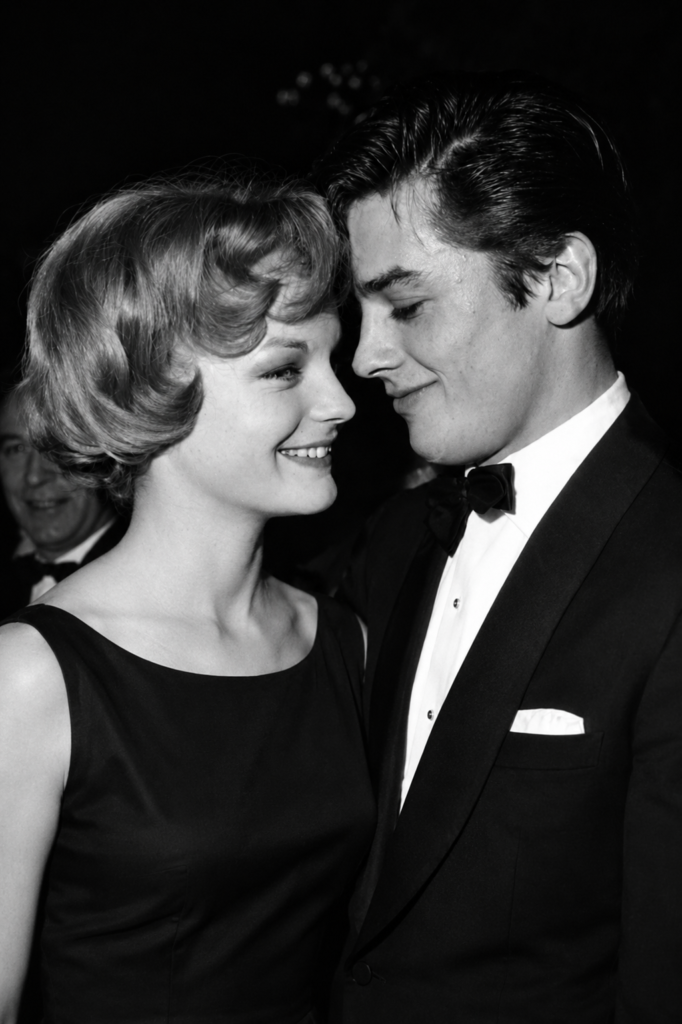
Women across the world adored him. Men admired him or wanted to imitate him. Fashion followed him naturally. Even his imperfections added to the legend. Stories often mention that Delon disliked smiling too widely because he felt insecure about his teeth. Ironically, that restraint only increased his mystique. His controlled expressions became part of his signature style.
His romantic life also fed the myth. Delon was linked to some of the most admired women of his era, including Romy Schneider, Brigitte Bardot, Jane Fonda, and Mireille Darc. Jane Fonda once described him as “the most beautiful human being.” Coming from someone surrounded by Hollywood stars, that statement carried enormous weight.
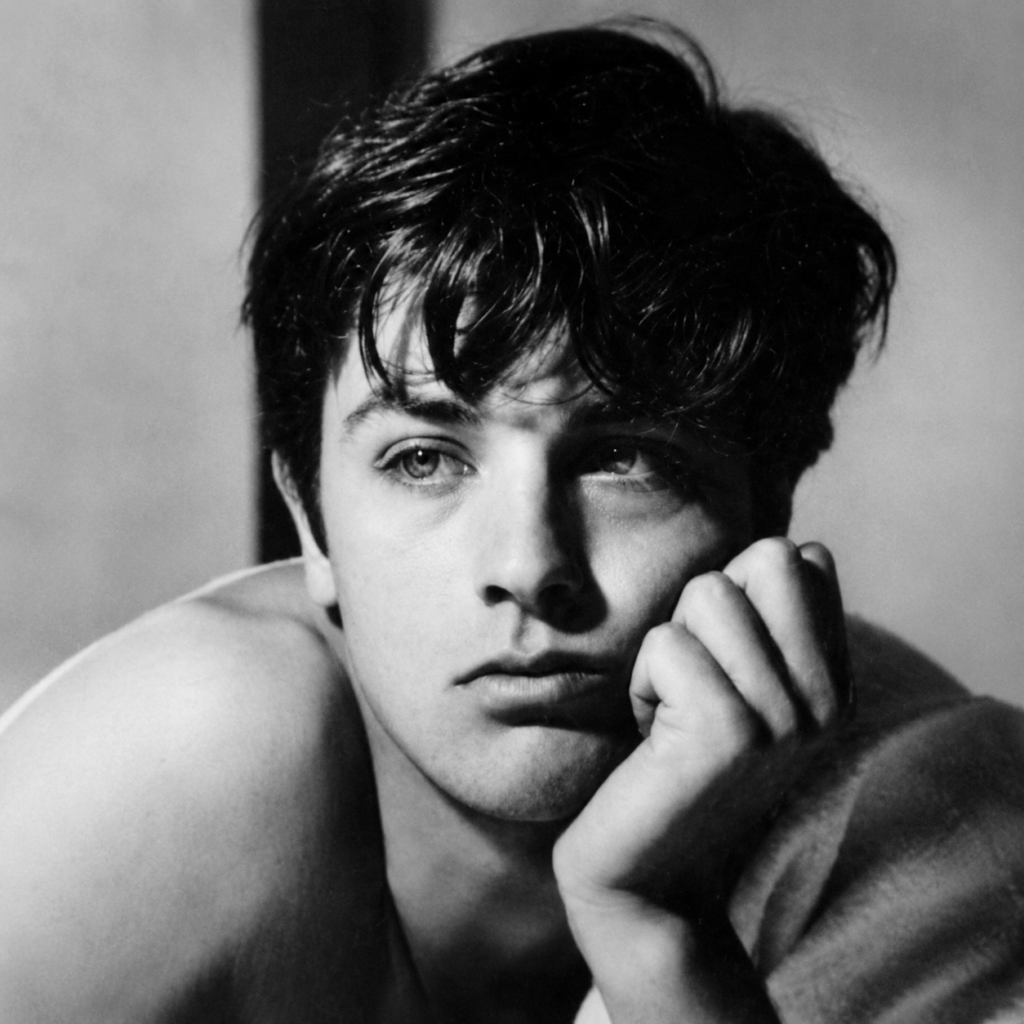
Part of what keeps Delon legendary today is that his beauty belonged to a different era of cinema. Modern celebrity culture is saturated with filters, cosmetic procedures, social media branding, and constant exposure. Alain Delon existed before all of that. His beauty felt natural, almost mythological. Audiences discovered him through giant cinema screens, magazine covers, and rare television appearances. The distance between star and public created fascination. He was not endlessly accessible online. That mystery preserved his image.
And unlike many actors remembered mainly for appearance, Delon understood how to use beauty as a cinematic weapon. He often reduced his performances instead of exaggerating them. While other actors expressed emotion loudly, Delon would remain still. His silence forced audiences to study his eyes, his posture, his smallest gestures. That restraint made him unforgettable.
There is also the tragic dimension of beauty itself. One reason audiences remain fascinated by young Alain Delon is because cinema freezes time. In real life, beauty fades. Youth disappears. But films preserve moments forever. Through movies like “Purple Noon,” “Le Samouraï,” and La Piscine, Delon remains eternally suspended at his peak. He never truly ages inside those frames.
So, was young Alain Delon the most handsome man ever?
Objectively, beauty will always remain subjective. Every generation chooses its own icons. Some will argue for Paul Newman, others for Marlon Brando, Omar Sharif, or modern stars like Brad Pitt. But Alain Delon belongs to a category that feels different from ordinary attractiveness.
He became an idea.
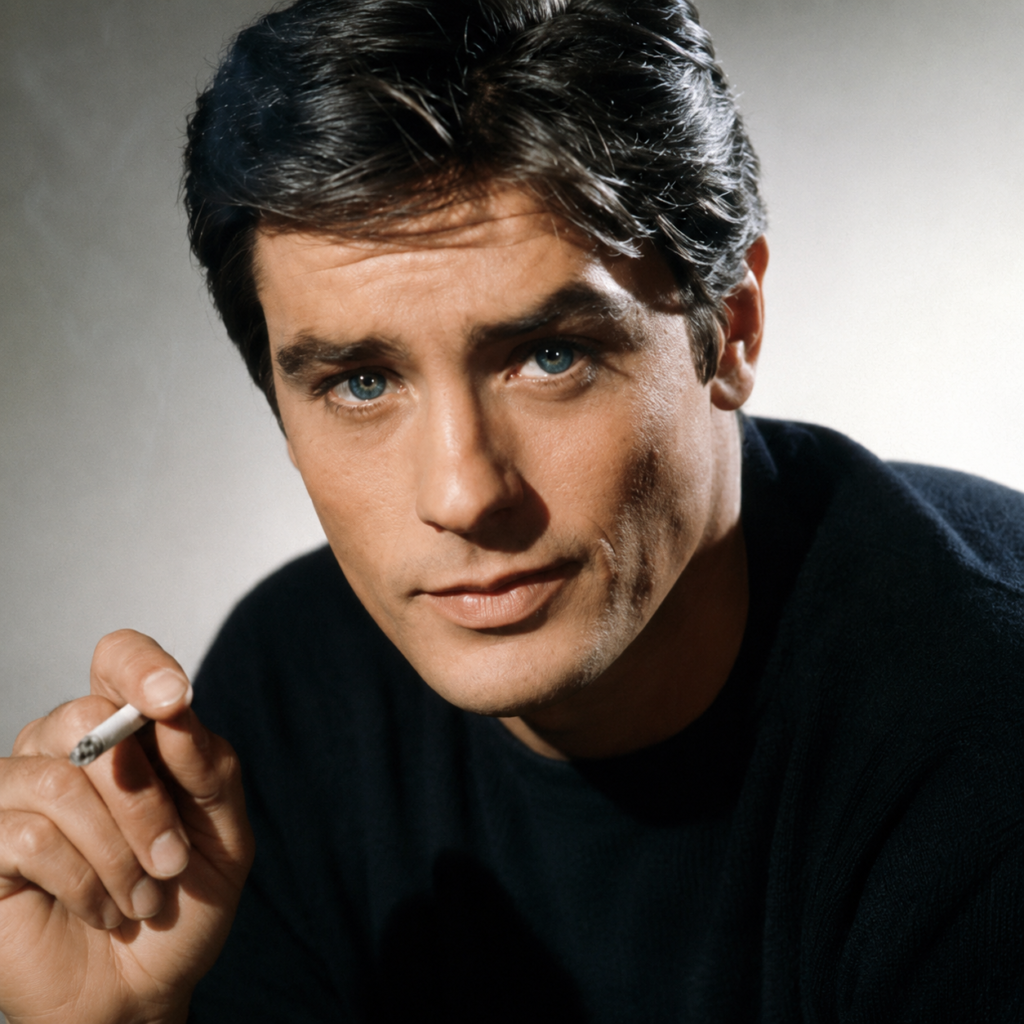
An impossible standard.
A face that looked almost too perfect to belong to reality, combined with the cold elegance of classic European cinema. More than sixty years later, photographs of young Alain Delon still spread across the internet with captions asking the same question over and over again: “How could someone look like this?”
Perhaps that is the answer itself.
When discussions about beauty continue decades after a person’s prime, when entire generations who never watched his films still recognize his face instantly, when filmmakers, actors, fashion designers, and audiences continue to reference him as the definition of male elegance — then maybe the argument has already been settled.
Cinema may not officially be a beauty contest.
But if it ever was, young Alain Delon would be very difficult to defeat.